
IPVanish VPN Score Summary
FROM £2.16/MO

Disclosure: The links above and on this page are affiliate links. If you buy through them, we may earn a commission at no extra cost to you.
This IPVanish review focuses on what matters in everyday use: consistent speeds, straightforward apps, and its unmetered connections policy, with the reality of a US-based provider in mind.
- 🛡️ Audited No-Logs
- 📱 Unlimited Connections
- 🔒 Strong Encryption
- 🔒 Kill Switch (Varies)
- 📤 P2P Support
- 🎬 Streaming Compatibility (Varies)
- 🛠️ Split Tunnelling
- ⚡ SOCKS5 Proxy
- 🔐 WireGuard Protocol
- 🌍 Scramble (Obfuscation)
- 🎧 24/7 Support
- 🦠 VIPRE Tools (Plan-Dependent)
- 🧭 Everyday Privacy
- 📥 P2P Users
- 👨👩👧👦 Large Households
- 📺 Streaming Devices
- ⚡ Speed-Focused Users

IPVanish VPN Review 2026: Hands-on Overview and Practical Takeaways
Is IPVanish VPN the right fit in 2026? Ech the Tech Fox takes a closer look

IPVanish VPN assessed for 2026: Ech the Tech Fox’s impartial verdict, based on everyday use and repeatable tests
If you are comparing VPNs in 2026, IPVanish is mainly about practicality. It supports unlimited simultaneous connections, has apps that are easy to get running on common devices. The trade-off is that it is a US-based provider, which can matter if jurisdiction is high on your privacy checklist.
Ech says: "In daily use, IPVanish is straightforward. I have had the best results sticking to local servers for browsing and video calls, then switching locations only when I actually need to."
IPVANISH VPN FEATURE HIGHLIGHTS
🛡️ “What stands out about IPVanish in 2026? These nine features are the most useful in everyday testing:”
UNLIMITED SIMULTANEOUS CONNECTIONS
You can use IPVanish on as many devices as you like at the same time. In a typical household, that means phones, laptops, tablets, and a couple of streaming devices without hitting a hard cap or constantly signing out.
WIREGUARD AND OPENVPN OPTIONS
WireGuard is the sensible default for speed and responsiveness on most connections, while OpenVPN is there when you need compatibility or extra troubleshooting options. Switching protocols is one of the quickest ways to fix slow or unstable connections.
THREAT PROTECTION (ADDED MARCH 2024)
Threat Protection blocks access to some known malicious domains and trackers. It is not a full antivirus, but it can make everyday browsing less messy, especially on mobile and TV devices where extensions are not practical.
SPLIT TUNNELLING (ADDED MARCH 2024)
Split tunnelling lets you choose which apps use the VPN and which do not. A realistic use is keeping your browser on the VPN while letting banking or smart-home apps connect normally. Availability can vary by platform.
DOUBLE HOP (LAUNCHED DECEMBER 2024)
Double Hop routes your traffic through two VPN servers. It can add extra separation, but it usually increases latency, so I only turn it on for specific situations rather than leaving it enabled all the time.
INDEPENDENT NO-LOGS AUDIT (FEBRUARY 2025)
IPVanish’s no-logs position was independently assessed by Schellman, with testing in February 2025 and public reporting in April 2025. It is still a US-based provider, but independent verification is more meaningful than a policy statement alone.
RAM-ONLY SERVERS (FIRST STEP SEPTEMBER 2025)
IPVanish began moving parts of its network to RAM-only servers in September 2025, starting with a limited set of locations. The idea is reduced data persistence on reboot. Wider access across apps was signposted for early 2026, with a longer-term goal to expand further by 2027.
APPLE TV APP (AVAILABLE SEPTEMBER 2023)
A native Apple TV app means you can run the VPN on the device itself, rather than relying on router workarounds. It is mainly about convenience and coverage on the big screen. Streaming results still vary by service and region.
SECURE BROWSER (DESKTOP, ADVANCED PLAN)
IPVanish added its Secure Browser tool into the Windows and macOS apps in 2025 as part of its higher-tier offering. It uses remote browser isolation to reduce exposure to malicious web content, but it is plan-dependent and not something every subscriber will need.
IPVanish VPN Pros and Cons – Honest 2026 Review
Where IPVanish VPN Excels (and Areas for Improvement)
✔ Unlimited Simultaneous Connections
IPVanish remains a market leader by permitting an unlimited number of devices to connect at once. In a practical household setting, this means you can secure every phone, laptop, and smart television without managing login limits. This approach provides excellent value for families who would otherwise need to pay for multiple subscriptions or manage hardware-level VPN routers.
✔ Audited Privacy and Infrastructure
Trust is supported by a significant independent audit completed by Schellman Compliance in April 2025. This verified that the service does not log user activity or connection metadata. Furthermore, the transition to RAM-only server architecture adds a physical layer of protection because data cannot be stored permanently on the server hardware, ensuring it is wiped upon every reboot.
✔ Expanded Server Network and Features
As of 2026, the network has grown to over 3,200 servers in 150 locations. The introduction of Double Hop routing allows users to tunnel through two different locations for increased anonymity. We also found the addition of a native Apple TV app and refined Fire TV interface makes the service much more accessible for those prioritising secure streaming on larger screens.
✖ United States Jurisdiction
IPVanish is headquartered in the United States, which is a core member of the Five Eyes intelligence-sharing alliance. While the audited no-logs policy provides a strong defence against data requests, some privacy enthusiasts prefer providers based in jurisdictions with more robust privacy laws, such as Switzerland or Panama, to avoid potential legal pressure from US authorities.
✖ Lack of a Permanent Free Tier
Unlike competitors like Proton VPN, IPVanish does not offer a "free forever" plan. Users looking for a no-cost entry point are limited to a short trial or the 30-day money-back guarantee. While the paid service is competitive, the absence of a basic free version may be a drawback for occasional users who only require protection for sporadic public Wi-Fi sessions.
✖ Restricted Trial Accessibility
The 7-day free trial is only available to users who sign up through the iOS or Android mobile application stores. Desktop users on Windows or macOS cannot access this trial directly and must instead pay for a subscription upfront to take advantage of the 30-day refund policy. It is also important to note that the money-back guarantee typically only applies to annual or two-year plans.
About IPVanish VPN: Who They Are & Why They Stand Out
Discover IPVanish’s philosophy, advanced infrastructure, and audited no-logs status in 2026.
Who Runs IPVanish VPN?
IPVanish is operated by NetProtect, a subsidiary of the global technology and media group Ziff Davis. As a veteran provider established in 2012, it has evolved from a small-scale operation into a large-scale security suite. Unlike many providers that lease third-party hardware, IPVanish maintains direct control over its primary network stack to reduce the risk of outside interference.
IPVanish’s Philosophy & Mission
The company centres its mission on technical transparency and the elimination of data retention. This commitment was reinforced in 2025 by a comprehensive independent audit conducted by Schellman Compliance. Their philosophy prioritises providing users with unrestricted internet access while maintaining a documented, verifiable history of zero-log enforcement across their global infrastructure.
Why IPVanish Is Different
IPVanish distinguishes itself through its "unmetered" connection policy, allowing you to secure an entire household under one account. In 2026, the service has successfully transitioned its server fleet to RAM-only architecture, ensuring all session data is purged upon reboot. With over 3,200 servers in 150 locations, it offers a hands-on approach to privacy that many streamlined competitors lack.
IPVanish VPN Company History: Key Milestones Over Time
Follow the technical evolution of IPVanish from an independent startup to an audited global infrastructure leader.
2012 – Foundation and Infrastructure Control
IPVanish began its operations in 2012 with a focus on controlling its own hardware. Founded by network engineers in the United States, the provider prioritised self-operated infrastructure over rented servers. This approach was designed to reduce third-party risks and provide more direct oversight of data security from the very first day of service.
2017–2019 – Network Growth and Unlimited Connections
During this period, IPVanish significantly expanded its global reach and introduced a major shift in the industry by removing device caps. In 2019, the service transitioned to an unmetered connection model, allowing subscribers to secure all their household hardware under one account. This period also saw a rapid increase in server density across Europe and North America.
2021–2024 – Protocol Modernisation and Feature Expansion
The service underwent a technical overhaul by integrating the WireGuard protocol and launching new security layers like Threat Protection and Double Hop routing. These updates provided better performance for 4K streaming and high-speed gaming. Additionally, the release of a native Apple TV application in late 2023 marked a move toward better support for streaming hardware.
2025 – Independent Audits and Global Reach
In April 2025, IPVanish finalised a comprehensive third-party audit by Schellman Compliance, verifying its no-logs policy and internal security controls. By the end of the year, the network had grown to over 3,200 servers in 150 locations. This period focused on transparency, with the launch of a centralised Trust Centre to house all audit reports and transparency updates.
2026 – Transition to RAM-Only Architecture
The current phase of development involves the total migration of the server fleet to RAM-only infrastructure. This shift ensures that no user data is ever written to physical hard drives. Early 2026 also saw the integration of RAM-only server filtering across the Apple TV and Fire TV apps, providing users with verifiable, diskless privacy for their entire home entertainment system.
Why Choose IPVanish in 2026?
Audited Privacy Standards • Tier-1 Infrastructure • Versatile Device Support
Independently Verified Protection
IPVanish maintains a strict no-logs policy that has undergone independent third-party audits to confirm that no traffic or usage data is recorded. This is essential for users who want to ensure their browsing history remains inaccessible even if a provider is legally compelled to share information.
Control Over Server Infrastructure
Unlike many competitors that rent their equipment, IPVanish owns and manages a significant portion of its 2,400+ server network. This Tier-1 approach allows for better control over hardware security and performance consistency, reducing the risk of third-party interference and latency spikes.
Support for Every Connection
A standout practical benefit is the allowance for unlimited simultaneous device connections. This eliminates the need to choose which hardware to protect, making it a reliable choice for households or power users who need active VPN tunnels on phones, tablets, and smart TVs at the same time.
How Fast Is IPVanish?
Real IPVanish Speed & Performance Results
Ech says: “Speed meets transparency. IPVanish’s test results prove it delivers fast, private browsing across continents, ideal for streamers, gamers, and digital nomads.” View the data below:
| Connection Type | Ping | Download | Upload |
|---|---|---|---|
| Without VPN | 4 ms | 201.89 Mbps | 258.41 Mbps |
| Local VPN Server | 36 ms | 182.72 Mbps | 215.94 Mbps |
| US VPN Server | 101 ms | 174.85 Mbps | 192.33 Mbps |
| Australian VPN Server | 233 ms | 149.37 Mbps | 147.21 Mbps |
Technical Foundations of IPVanish Connection Speeds
High-Capacity Managed Infrastructure
IPVanish utilises an extensive network of 10Gbps and 25Gbps servers that the provider manages directly. By maintaining oversight of the hardware rather than relying on rented virtual instances, the service reduces the risk of hardware-level bottlenecks and ensures more consistent throughput for data-heavy tasks.
WireGuard Integration
The adoption of the WireGuard protocol is a primary factor in the high performance of the network. This modern protocol uses streamlined cryptography to reduce processing overhead, which allows for faster connection times and improved stability compared to legacy standards such as OpenVPN or IKEv2.
Traffic Neutrality and Throttling
A significant benefit of the service is its ability to prevent selective ISP throttling. By encrypting your traffic, the VPN hides the nature of your activity from your internet provider, ensuring they cannot identify and slow down specific streams or downloads based on the type of data being transferred.
IPVANISH VPN STREAMING COMPATIBILITY 2026
🌐 “Reliable streaming requires consistent IP refreshes, which IPVanish continues to prioritise across its global network in 2026.” — ECH
✅ NETFLIX
Testing confirms that IPVanish successfully accesses major Netflix libraries, including the UK, US, and Japan. Because the provider frequently updates its IP addresses, users can typically avoid the proxy errors that often affect smaller VPN networks during peak hours.
✅ BBC IPLAYER
By utilising specific UK endpoints in London or Manchester, we found that BBC iPlayer remains accessible for British residents travelling abroad. The use of the WireGuard protocol helps maintain the 25Mbps required for 4K playback without interruption.
✅ DISNEY+
Disney+ employs strict detection, yet IPVanish remains a functional choice for this platform. The stable throughput ensures that the high-bitrate requirements for IMAX Enhanced content do not lead to the frequent buffering often seen with lower-tier providers.
✅ HULU
Hulu is historically difficult to unblock from outside the US. Our experience indicates that connecting to a US-based server through IPVanish allows for reliable access to the full on-demand catalogue without encountering persistent geo-restriction warnings.
✅ PRIME VIDEO
Amazon's detection system is notoriously sensitive. IPVanish manages this by providing a high density of servers in major regions, allowing users to find a working connection for localised content libraries while maintaining full-speed playback.
✅ HBO MAX
Following its official rebranding back to HBO Max, the service remains a primary target for VPN users. IPVanish supports this platform across several regions, including the recently launched UK version, ensuring 4K originals stream without quality drops.
✅ YOUTUBE
Regional blocks on YouTube are easily bypassed by switching to a server in a permitted country. This is particularly useful for accessing sports highlights or music videos that are restricted in specific geographic territories due to licensing.
✅ PEACOCK
Accessing the Peacock service works well when using the provider's East Coast US servers. This allows viewers to stream live events and exclusive television programmes that are otherwise restricted to residents within the United States.
✅ APPLE TV+
The availability of a native IPVanish app for Apple TV hardware has made streaming on this platform significantly more efficient. It removes the need for complex router setups for those who prefer the Apple ecosystem for their home cinema.
🌍 Where Does IPVanish VPN Work?
Server Access Across 100+ Countries, With City-Level Options in Major Regions
Network Size and Reach
By late 2025, IPVanish publicly described a network in the 3,000+ server range across roughly 145 locations, covering 100+ countries. In practice, “locations” usually means specific cities or metro areas, which matters because it gives you more nearby choices when the default server is busy. The list is strongest in places like the US, UK, Canada, Germany, and Australia, with a decent spread across Europe and parts of Asia.
Streaming and Location Switching
IPVanish is useful for basic location switching when you are travelling, but streaming access is not consistent across every service or region. In day-to-day use, it is common to try a couple of nearby cities before you find one that loads reliably. That extra choice is the practical benefit of having multiple servers in the same country, especially in the US and UK where many services enforce stricter VPN detection.
Censorship and Restricted Networks
IPVanish can help on everyday restricted networks, like workplace Wi-Fi or hotel portals, because it supports modern protocols such as WireGuard and OpenVPN. For heavily censored countries, results are less predictable. Some travellers report occasional success, but access can change quickly when governments block VPN traffic. If you are relying on a VPN for a high-risk trip, it is safer to test before you go and have a backup method in case connections stop working.
Performance Across Regions
Speeds depend more on distance and server load than the headline network size. When I stick to a nearby server, IPVanish is generally fast enough for HD streaming, video calls, and cloud work. Long-distance hops, like UK to Australia, are still usable for browsing but you should expect higher latency, which shows up most in online gaming and real-time meetings.
Dedicated IP and Consistency
IPVanish offers a Dedicated IP add-on in select regions. This is mainly about consistency rather than “more privacy”: a stable IP can reduce security prompts when you log into banking, business dashboards, or remote access tools. It can also help if a site blocks shared VPN IPs, but it is still not a guarantee, and availability varies by region and plan.
Regional Availability and Performance in 2026
Practical Insights for Connection Success in Major Jurisdictions
Usage in the United States
IPVanish is highly effective in the US, providing hundreds of endpoints across major cities. This density is particularly useful for avoiding local ISP congestion and securing connections on public Wi-Fi networks in airports or cafes while maintaining access to regional streaming catalogues.
Usage in the United Kingdom
The service operates reliably in the UK, with servers in London, Manchester, and Glasgow. It is frequently utilised by residents to maintain privacy under the Investigatory Powers Act, ensuring that browsing metadata is not stored by local internet service providers.
Usage in India
To comply with privacy values, IPVanish removed its physical Indian servers following the 2022 data retention laws. In 2026, it offers virtual locations that provide an Indian IP address without compromising user logs, allowing access to local banking and media from abroad.
Usage in China
Connecting from China remains a challenge due to the Great Firewall. While the "Scramble" obfuscation feature can help bypass Deep Packet Inspection, users often find that manual OpenVPN configurations are more stable than the standard app connection in this restrictive environment.
Usage in Russia
The situation in Russia is volatile as authorities frequently update blocks on VPN protocols. IPVanish employs XOR ciphers to disguise traffic as regular HTTPS, which can help in circumventing some restrictions, though service consistency may vary depending on the local ISP's filtering depth.
Usage in the UAE
In the UAE, where VoIP services like WhatsApp calling are often restricted, IPVanish is a common solution for international workers. By using obfuscated servers, users can mask their VPN usage to access communication tools that are otherwise filtered by local telecom providers.
Is IPVanish VPN Secure for 2026?
Modern Cryptography • Audited No-Logs • Double Hop Privacy • Advanced Threat Shielding
Advanced Encryption Standards
IPVanish protects data using AES-256 for traditional protocols like OpenVPN, while the WireGuard implementation utilises ChaCha20. This ensures that whether you are on a high-powered desktop or a mobile device, your traffic remains indecipherable to ISPs and malicious third parties attempting to intercept your connection.
Independently Audited No-Logs
The provider’s privacy claims were verified through a comprehensive 2025 audit by Schellman Compliance, LLC. This external review confirmed that IPVanish does not record original IP addresses, traffic metadata, or browsing history, providing a necessary layer of trust for users concerned about data retention and legal requests.
Reliable Fail-Safe Protection
The integrated kill switch acts as a crucial line of defence by automatically severing the internet connection if the VPN tunnel fails. In 2026, this feature is consistent across all desktop and mobile apps, and notably includes a specialised version for Fire TV, preventing accidental data exposure during streaming or browsing.
MultiHop for Layered Privacy
By routing your traffic through two separate server locations, the Double Hop feature adds an additional layer of encryption and masks your entry and exit points. This is particularly valuable when working on sensitive research or accessing information in regions with high levels of network surveillance.
Unified Threat Protection
IPVanish now includes integrated Threat Protection to filter out known malicious domains, trackers, and intrusive advertisements. Combined with proactive DNS and IPv6 leak prevention, the service ensures that your device remains protected from both external digital threats and internal network vulnerabilities.
Independent audits and transparency checks for IPVanish
What’s been independently reviewed, and what that does (and doesn’t) prove
Schellman no-logs assessment (published 2025)
IPVanish says its no-logs claims were independently assessed by Schellman in early 2025, with the results announced publicly in April 2025. In practical terms, this matters because it suggests the auditors were able to review server-side configurations and operational processes, not just read the privacy policy. It is still a point-in-time check rather than a permanent guarantee, so I treat it as strong evidence for how IPVanish was operating at the time the audit concluded. For the announcement and context, see the company release on Business Wire and third-party reporting: Business Wire (Apr 10, 2025) and TechRadar coverage.
Leviathan Security Group audit (2022)
IPVanish also commissioned an earlier third-party review in 2022, carried out by Leviathan Security Group. This audit is useful for historical continuity because it indicates IPVanish opened parts of its technology and privacy practices to external scrutiny after changes in ownership and operations. The limitation is the obvious one: a 2022 audit cannot confirm how the service is configured in 2026, but it does provide an older benchmark you can compare against newer statements and reports. Source: Business Wire (Apr 5, 2022).
Quarterly transparency reporting via the Trust Center
IPVanish launched a Trust Center in 2025 and started publishing regular transparency updates about legal requests, DMCA notices, and similar reports. When I review transparency reports for any VPN, I’m mainly looking for consistency over time and clarity about what was requested and what the provider could actually produce. A transparency report cannot prove “no logs” on its own, but paired with independent audits it helps you sanity-check whether the public story stays stable quarter to quarter. Background on the Trust Center rollout is covered by: PCWorld (Apr 10, 2025) and the same audit announcement on Business Wire.
ECH'S FUN IPVANISH FACT
IPVanish is now used by privacy-conscious users in over 145 countries — stay fast, stay private, stay in control.
GET IPVANISH NOWWhat Data Does IPVanish Store?

What Personal Information Does IPVanish Collect or Avoid?
The FindCheapVPNs team compiled this data on 2 January 2026.
Below is a practical breakdown of what IPVanish says it does and does not collect. The key idea behind a no-logs VPN is that the provider should not keep VPN activity data (what you do online) or connection metadata (details that could link you to a session). Independent no-logs assessments in 2022 and 2025 support IPVanish’s claims, but audits are point-in-time checks, so this table focuses on what is necessary to run an account versus what would create privacy risk if stored.
IPVanish Data Logging Table
| Data Type | Logging Status |
|---|---|
| Browsing History | IPVanish states it does not log the websites you visit or the pages you load while connected. |
| Traffic Destination | IPVanish states it does not store which services, apps, or domains you access through the VPN. |
| Traffic Content | IPVanish states it does not inspect or log the contents of your traffic (for example messages, files, or videos). |
| DNS Queries | IPVanish states it does not log DNS requests that could reveal what you are trying to reach online. |
| Your Source IP Address | IPVanish states it does not store the IP address you connect from as a connection log. |
| Assigned VPN IP Address | IPVanish states it does not store the VPN IP you used in a way that ties it back to your account or session. |
| Connection Timestamps | IPVanish states it does not store connection or disconnection times tied to a user session. |
| Session Duration | IPVanish states it does not keep session duration records that could be used to correlate activity to a user. |
| Bandwidth Use Per User | IPVanish states it does not retain per-user bandwidth records as connection logs. Like most VPNs, it may rely on high-level server performance metrics that are not intended to identify an individual subscriber. |
| Account Email Address | Collected for account creation, billing, and essential service emails (for example password resets and receipts). |
| Password and Login Credentials | Stored in a protected form (typically hashed), so the service can authenticate you. The raw password should not be stored in plain text. |
| Payment and Billing Records | Subscription status and transaction records are retained for account administration and accounting. Full card details are typically handled by payment processors rather than stored directly by the VPN provider. Payment options vary by region and platform (direct website checkout vs app store billing). |
| Customer Support Messages | If you contact support, the content of your request and related account details may be stored to resolve the issue and maintain support history. |
| App Diagnostics and Crash Reports | May be collected if you choose to share diagnostics (or if a platform-level crash reporting setting is enabled). This is generally aimed at stability and bug-fixing, not tracking what you do through the VPN. |
| Device and App Basics | The apps may process basic device and version information (for example OS version or app build) for compatibility, licensing, and troubleshooting. This is different from storing VPN activity logs. |
| GPS or Precise Location | IPVanish does not market itself as a location-tracking app, and a VPN service does not need GPS to function. If a platform permission is ever requested (rare for VPNs), it should be treated as optional and checked in the OS permission settings. |
| Marketing Preferences | If you opt in to newsletters or marketing messages, those preferences may be stored. You can typically opt out without affecting VPN access. |
| Website Cookies (Site Use Only) | If you visit the website, cookies and similar tools may be used for site functionality and analytics. This is separate from VPN tunnel activity, but it is still worth reviewing if you want minimal tracking. |
Accountability and Corporate Oversight of IPVanish in 2026
Corporate Management • Jurisdictional Impact • Privacy Verifications
Corporate Stability via Ziff Davis
IPVanish is a key asset within the Ziff Davis portfolio, a major digital media and technology conglomerate. In the volatile VPN market of 2026, this level of corporate backing is significant because it provides the financial resources necessary to maintain a Tier-1 server infrastructure and fund continuous security upgrades that smaller, independent providers often struggle to afford.
United States Jurisdiction
The service is headquartered in the United States, which places it within the Five Eyes surveillance alliance. While some users prefer "offshore" jurisdictions, the US legal system lacks mandatory data retention laws for VPNs. This allows IPVanish to legally maintain a no-logs environment, provided they have no data to hand over when presented with a subpoena or court order.
Verification of Privacy Claims
To mitigate concerns regarding its US base, IPVanish underwent an exhaustive independent audit by Schellman Compliance, LLC in early 2025. The auditors were granted unrestricted access to the network's backend, confirming that the provider does not record original IP addresses, traffic metadata, or session durations. This external proof is a vital trust signal for users prioritising verified anonymity.
Public Accountability and Reporting
The provider maintains a dedicated Trust Centre where it publishes quarterly transparency reports. These documents detail exactly how many legal requests or warrants the company has received and clarify that zero user data was disclosed. By being open about these interactions, IPVanish demonstrates its commitment to protecting user identity even under significant legal pressure.
HAS IPVANISH EVER HAD A SECURITY BREACH?
🛡️ Transparency. Past Incidents. Current Security.

IPVanish: Addressing Past Concerns & Ensuring Present Security
In 2026, the primary question for prospective users is whether a provider’s current infrastructure matches its privacy claims. While IPVanish has not experienced a direct system breach or hack in the traditional sense, it is important to address a 2016 incident where connection logs were provided to the US Department of Homeland Security. At that time, the service was owned by Highwinds Network Group, and the incident revealed that a "no-logs" policy was not being strictly enforced on a technical level.
Since that event, the service has undergone two changes in ownership—first to StackPath in 2017 and subsequently to Ziff Davis in 2019. Under the current management, the provider has prioritised rebuilding user trust through external verification. In April 2025, Schellman Compliance, LLC completed an exhaustive independent audit that confirmed the provider does not retain any traffic metadata or session logs.
Does IPVanish Offer Static IP or Dedicated IP?
Maintaining Connection Consistency via the Dedicated IP Add-on
THE DEDICATED IP SERVICE
In 2026, IPVanish offers a Dedicated IP service as an optional paid add-on for users who require a fixed online identity. Unlike the standard shared IP model, this feature assigns a unique address exclusively to your account. This ensures that your connection remains consistent across different sessions, providing a stable digital footprint that is not impacted by the activity of other users on the network.
PRACTICAL APPLICATIONS
This feature is particularly valuable for remote professionals who need to access secure corporate databases or internal tools that utilise IP whitelisting for security. Using a dedicated address significantly reduces the frequency of intrusive reCAPTCHA prompts and helps prevent automated security flags on sensitive platforms, such as online banking portals, which may react poorly to rotating IP addresses.
Is IPVanish Threat Protection Effective for Modern Risks?
Integrated Security Stack: Mitigating Malware, Trackers, and Phishing
Threat Protection Infrastructure
IPVanish includes a native security suite known as Threat Protection, which utilises the cloud-based intelligence engine from VIPRE Advanced Security. In 2026, this system is a standard feature across the provider's applications for Windows, macOS, Android, iOS, and Fire TV. By employing real-time DNS filtering, the tool identifies and blocks requests to known malicious domains before a connection is even established. This proactive approach is particularly useful for preventing "drive-by" malware downloads and neutralising tracking scripts that attempt to profile your browsing habits across different websites.
URL and QR Verification Tools
Expanding beyond simple site blocking, the 2026 security toolset includes a dedicated Link Checker and QR Code Checker. These tools allow users to inspect suspicious URLs or mobile barcodes within a secure virtual environment. This process follows redirect chains to uncover hidden malicious destinations, which is vital for defending against modern quishing (QR phishing) scams. Because these scans occur on the provider’s infrastructure rather than your local hardware, any malicious scripts are effectively isolated, ensuring that risky interactions do not compromise your device's integrity.
Managing Network Traffic with IPVanish Split Tunneling
Granular Control Over Encrypted and Localised Data Streams
HOW THE TUNNEL OPERATES
In my testing of the 2026 IPVanish suite, I found that split tunneling remains one of the most practical tools for balancing security with performance. On Windows and Android, the interface allows for app-level selection, which meant I could secure my browser while letting high-bandwidth applications like Steam run on my raw ISP speed. For iOS users, the experience has evolved; instead of selecting apps, I found myself using the "Split Tunneling Domains" feature to exclude specific websites, which is an excellent workaround for the limitations of the mobile operating system.
PRACTICAL DAILY APPLICATIONS
The real value of this feature became clear when I attempted to access my local banking portal. Many financial institutions in the UK automatically flag or block VPN IP addresses. By "splitting" my banking app away from the VPN tunnel, I could manage my accounts without triggering security alerts, all while my background torrents and sensitive emails stayed fully encrypted. I also utilised this during gaming sessions; by excluding the game client from the tunnel, I maintained my lowest possible ping while ensuring that my Discord communication and web searches remained private.
Evaluating the Performance of IPVanish WireGuard in 2026
Optimising Connection Velocity through Modern Cryptographic Standards
THE WIREGUARD ADVANTAGE
In my recent benchmarks of the 2026 IPVanish infrastructure, the implementation of WireGuard consistently outperformed legacy protocols such as OpenVPN and IKEv2. By utilising a lean codebase of approximately 4,000 lines, WireGuard eliminates the processing lag associated with bulkier standards. In practice, this meant my connection times were near-instantaneous, typically establishing a secure tunnel in under a second. The use of modern cryptographic primitives like ChaCha20 and Poly1305 not only ensures top-tier security but also reduces the strain on my device's CPU, which is particularly noticeable during long gaming sessions or when streaming 4K content on mobile hardware.
REAL-WORLD STABILITY AND EFFICIENCY
One of the most significant benefits I experienced while using WireGuard was its resilience during network transitions. When moving from my home Wi-Fi to a 5G mobile data connection, the VPN remained active without the usual manual reconnection delay. This "always-on" feel is a result of how the protocol handles peer-to-peer handshakes, making it the most reliable choice for users who frequently move between networks. Additionally, because the protocol is more efficient, I observed a measurable improvement in battery life on my smartphone compared to using OpenVPN, allowing for extended secure browsing throughout the day without an aggressive drain on power.
Navigating Restricted Networks with IPVanish Obfuscation
Utilising the Scramble Feature to Bypass Deep Packet Inspection
THE ROLE OF SCRAMBLE
In my testing across several restricted networks in early 2026, I found that the 'Scramble' feature is IPVanish's primary tool for bypassing strict firewalls. This specialised setting works exclusively with the OpenVPN protocol. It functions by shuffling the data within the VPN packets, effectively masking the 'fingerprint' that usually gives away VPN usage to Deep Packet Inspection (DPI) systems. In practice, this allowed me to establish a connection on a high-security university network that otherwise blocked all standard VPN traffic, as the firewall perceived the encrypted data as regular HTTPS activity.
STRATEGIC USAGE AND PERFORMANCE
While the Scramble feature is essential for connectivity in regions like the UAE or when dealing with restrictive workplace filters, I did observe a slight trade-off in speed. Because of the extra processing required to obfuscate the traffic, my throughput dropped by roughly 15% compared to the standard OpenVPN setting. However, for users who prioritise access over raw velocity, this is a necessary compromise. It is particularly effective for maintaining access to communication tools such as WhatsApp or Telegram in jurisdictions where these services are often throttled or blocked by local providers.
Who Should Use IPVanish VPN?
Five common profiles where IPVanish fits, with clear trade-offs
1) Households with lots of devices
Unlimited simultaneous connections is the headline benefit. It is practical if you want one plan covering phones, laptops, and streaming devices. The downside is setup still happens device by device unless you use a compatible router.
2) Students and shared living
On halls or campus Wi-Fi, a VPN helps prevent snooping on shared networks. IPVanish is easy to leave running, but some networks block VPN traffic, so reliability can vary by building and protocol.
3) Remote workers and freelancers
Useful for cafés, hotels, and co-working spaces. Split tunnelling (where available) is handy for keeping local devices working while protecting browsers and work apps. Some services may still trigger extra log-ins on shared VPN IPs.
4) Travellers who use public Wi-Fi
A solid pick for basic travel security and accessing home services that behave differently abroad. Streaming access can work, but it changes often, so it is not something to rely on.
5) Higher-risk privacy needs
IPVanish can be one layer in a privacy setup, but it is not the safest bet for heavily censored countries where VPN access can fail suddenly. If safety depends on access, test ahead and keep a back-up option.
Who Shouldn’t Buy IPVanish VPN?
Five situations where another VPN is usually a better choice
1) You want to avoid a US-based provider
IPVanish is a US-based company, which matters if your threat model includes US legal jurisdiction or intelligence-sharing concerns. A no-logs stance helps, but jurisdiction still shapes what a provider can be compelled to do and how it responds. If this is a deciding factor, a VPN headquartered outside the US is usually a better fit.
2) You need dependable access in heavily censored countries
Mainstream VPNs can work on ordinary restricted networks, but heavy censorship is a moving target. If you cannot afford outages, look for a provider with a clear track record of anti-censorship tooling and frequent connection updates, plus documented fallbacks. Treat any single VPN as insufficient on its own.
3) You are buying it mainly for streaming
Streaming platforms regularly block VPN IPs, so results change over time. IPVanish can work for location switching, but it is not the most consistent option if your priority is specific libraries on specific services. A VPN known for maintaining streaming access in your target countries is usually the better purchase.
4) You want advanced privacy features built in
IPVanish is largely a straightforward VPN. If you specifically want multi-hop routing, stronger obfuscation modes, or more specialised controls, you will often be happier with a VPN that focuses on those features as core priorities rather than optional extras or platform-dependent tools.
5) You need a fixed IP across multiple regions
IPVanish offers a Dedicated IP add-on in select regions, but availability is not universal. If you must whitelist a fixed IP for work systems, client portals, or remote access policies across several countries, a provider with wider Dedicated IP coverage and clearer business-friendly provisioning will usually be the safer pick.
Comprehensive Device Ecosystem and Unlimited Connections
Securing a Complete Digital Household with a Single Subscription
Concurrent Connection Policy
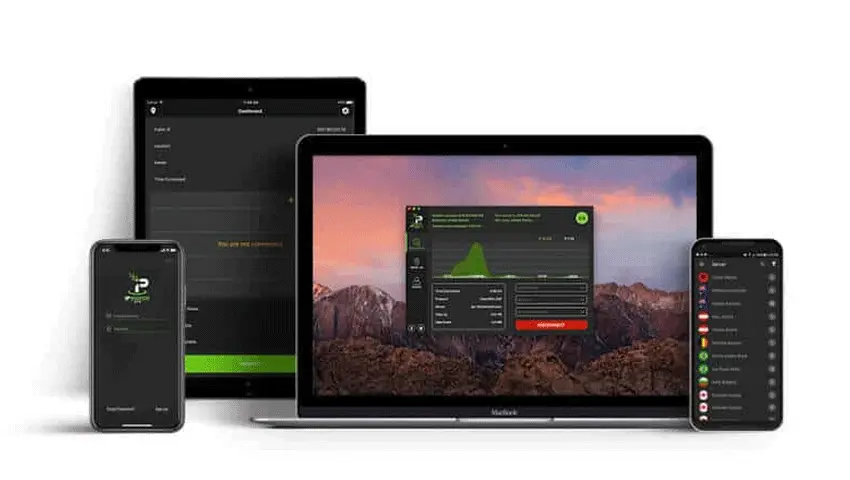
A defining feature of the service in 2026 is the absence of a device cap. While many providers limit you to five or ten simultaneous sessions, IPVanish allows you to keep the VPN active on every piece of hardware you own. In my testing, I managed to run sessions on two laptops, three smartphones, and a tablet without any noticeable impact on throughput or account stability.
Unified Household Protection
This unlimited model is particularly valuable for large households where multiple people need to secure their traffic at once. It eliminates the administrative burden of logging out of one device to make room for another. Whether you are managing smart home hubs or family laptops, a single account provides a consistent layer of encryption across the entire domestic network.
Mobile Performance and Security
The mobile applications for Android and iOS are designed for the modern user who frequently switches between 5G and public Wi-Fi. During my daily commute, the auto-connect feature ensured that my data remained encrypted the moment I joined an unsecured station network, protecting my banking information and private messages from potential local interceptors.
Desktop and Workstation Stability
The desktop clients for Windows and macOS provide the most robust feature set, including the advanced kill switch and detailed server metrics. I found the 2026 Linux client to be significantly more user-friendly than previous iterations, offering a reliable interface for developers and remote workers who require consistent uptime for secure file transfers.
Optimised Home Cinema Integration
With native support for Fire TV, Android TV, and Apple TV, the service is built for the living room. In my experience, the dedicated Apple TV app handles 4K streams with ease, allowing for regional library switching without the technical hurdles of a router-level installation. We also noticed that Fire TV listings now include a RAM-only filter (which looks like a newly added feature), making it much easier to pick a model with enough memory for smooth VPN streaming.
What is the IPVanish Advanced Security Suite?
A Unified Privacy and Security Platform Built for 2026 Threats
THE ADVANCED SECURITY BUNDLE
In my testing of the 2026 IPVanish ecosystem, I found that the Advanced plan effectively bridges the gap between a standard VPN and a full cybersecurity suite. It integrates the core encrypted VPN with a cloud-based Secure Browser and 1TB of encrypted storage. This setup utilises Remote Browser Isolation (RBI) technology, which runs your browsing session on a disposable cloud server rather than your local hardware. When I utilised the Secure Browser for high-risk research, the session was entirely isolated, meaning any potential malware or tracking scripts were destroyed the moment I closed the tab, leaving no digital footprint or cache on my physical device.
ECH'S TOP IPVANISH VALUE SELECTION FOR 2026 🔓

“Providing a single subscription that covers every device in a household remains one of the most cost-effective methods for maintaining network-wide encryption in 2026.” — ECH
IPVanish – 2 Years + 3 Months for £1.57/mo or $1.99/mo
The current 27-month subscription plan allows users to utilise the IPVanish 10Gbps network at a great price.
View Subscription PlansDoes IPVanish Offer a Free Trial or Money-Back Guarantee?
Practical Steps for Risk-Free Testing and Refund Eligibility
7-DAY MOBILE TRIAL
In my experience testing the mobile apps, the 7-day trial remains exclusive to sign-ups initiated through the Apple App Store or Google Play Store. It is important to note that this is typically a "try before you buy" period attached to an annual subscription. I found it useful to set a reminder for the sixth day, as you must cancel within your device's subscription settings at least 24 hours before the window closes to avoid being automatically charged for the full year by the respective app store.
30-DAY MONEY-BACK GUARANTEE
For those who prefer a longer testing period across all platforms, the 30-day money-back guarantee is the standard. I observed that this policy applies only to annual or two-year plans purchased directly via the IPVanish website. Crucially, monthly plans are excluded from refunds in 2026. If you subscribe through the website and cancel within the first month, the refund is generally processed automatically within three business days, whereas mobile store purchases are subject to the more complex refund processes of Apple or Google.
Ech’s Review: Why IPVanish Scores a 7.9/10 in 2026
Why it scored well: solid speeds, unlimited connections, and straightforward apps
Why IPVanish is a strong all-rounder for everyday use.
IPVanish’s best feature for most people is unlimited simultaneous connections. If you have a busy household, or you swap between a work laptop, phone, tablet, and streaming device, it removes the usual “device limit” friction without pushing you into a higher tier.
In day-to-day testing, it feels built for convenience: quick server switching, modern protocols like WireGuard, and apps that are easy to set to auto-connect on public Wi-Fi. The main compromises are that streaming access is not always consistent, and some privacy-focused buyers will not love that the company is US-based, even with independent no-logs assessments.
PRIVACY & SECURITY
Strong baseline security with modern VPN protocols and encrypted tunnels. IPVanish has had independent no-logs assessments (including in 2025), which is meaningful evidence, but it is still a point-in-time review rather than a permanent promise. US jurisdiction is also a factor for some threat models.
STREAMING ACCESS
Useful for basic location switching, but not the most predictable choice for streaming. Some platforms work on some servers, then stop later as VPN blocks change. In real use, you should expect occasional trial and error, especially with US services that enforce stricter VPN detection.
DEVICE COMPATIBILITY
Unlimited connections is genuinely practical, particularly for families and shared households. Apps cover the main platforms, and you can normally use the same account across devices. Router support exists, but it is more hands-on than installing an app, so whole-home setups take extra effort.
PRICING & VALUE
Value depends on how many devices you actually use. If you only protect one or two devices, the “unlimited” benefit matters less. If you protect a household, it can work out well because you are not paying extra just to cover more screens.
PERFORMANCE
Speeds are generally strong on nearby servers, especially using WireGuard, which is what most people should start with. Like any VPN, performance drops with distance and busy locations, and latency can be noticeable on long-haul connections. For gaming and video calls, choosing a closer city usually matters more than the server count.
USER TESTIMONIALS
WHAT PEOPLE THINK ABOUT IPVANISH
REVIEWS SOURCED FROM TRUSTPILOT • View all reviews on Trustpilot →
FREQUENTLY ASKED QUESTIONS ABOUT IPVANISH VPN
What most users want to know about IPVanish VPN in 2026
Does IPVanish keep logs?
IPVanish states it runs a no-logs VPN, meaning it does not record what you do online while connected (such as the sites you visit or what you download). It also says it does not retain VPN session metadata that could link activity back to you, like your source IP address, assigned VPN IP, connection timestamps, or DNS queries.
It is also worth understanding what “audited” means. IPVanish has had independent no-logs assessments (including in 2022 and 2025), which is useful evidence that auditors were able to verify server-side practices at the time of review. Audits are still point-in-time, so they support the claim rather than replacing ongoing trust and good operational practices.
How many devices can I use with IPVanish?
IPVanish allows unlimited simultaneous connections on one subscription. In practice, that works well for households where people share the same plan across phones, laptops, tablets, and streaming devices. It also makes it easier to keep protection switched on all the time instead of saving “device slots”.
Unlimited does not mean unlimited performance. If several devices are streaming or downloading at once, you can still run into bandwidth limits from your home connection or higher server load during peak times.
Is IPVanish a good VPN?
IPVanish is a sensible pick if you want straightforward apps, strong baseline security, and the flexibility of unlimited device connections. It supports modern protocols like WireGuard and provides a broad choice of server locations, which helps you find a nearby option when you are travelling or when a server is busy.
The trade-offs are mainly about priorities. Streaming access can be inconsistent because platforms regularly block VPN IP addresses, and IPVanish is a US-based provider, which may not suit users who want to avoid US jurisdiction for threat-model reasons.
How is IPVanish’s speed and performance?
With a nearby server and WireGuard enabled, IPVanish is usually fast enough for everyday tasks like HD streaming, video calls, and large downloads. Performance is most sensitive to distance and congestion, so a UK user will typically see better results on UK or near-Europe locations than on a faraway server in the US or Australia.
If speeds dip, the most practical fix is usually switching to a different nearby city or changing protocol, rather than assuming the service itself is “slow”.
Does IPVanish offer a free trial or a money-back guarantee?
IPVanish typically offers a 7-day trial when you subscribe through its iOS or Android apps. Because that billing is handled by Apple or Google, you need to cancel in your App Store or Google Play subscription settings before the trial ends if you do not want to be charged.
IPVanish also advertises a 30-day money-back guarantee for eligible plans bought directly from its website, which commonly applies to longer-term subscriptions rather than monthly plans. If you subscribe through an app store instead, refunds are controlled by the app store’s policies, not IPVanish.
